
Your tree disease treatment specialists in Scranton, KS. Free assessments, certified arborists, and complete cleanup.
B. Haney and Sons Arborists provides professional disease management throughout Scranton, KS. Many tree health problems get misdiagnosed, leading to wasted treatment money and continued tree decline. Our ISA-trained arborists identify the actual cause (often it is not a disease at all but a site or care problem), then treat appropriately.
Properties throughout Scranton (pop. 635) face unique challenges when it comes to tree disease treatment. Kansas climate patterns, the local tree species mix, and the specific site conditions across Scranton all influence the approach we take. B. Haney and Sons Arborists tailors every tree disease treatment project to the conditions your property actually faces — no generic solutions, no unnecessary work, no upselling on services your trees do not need.
Choosing the right contractor for tree disease treatment in Scranton, KS makes the difference between proper tree care and damage that can last for decades. B. Haney and Sons Arborists uses correct rigging, follows ANSI standards, and backs every project with workmanship pride from a company carrying on a tree care tradition since 1940. Call (833) 214-3237 to schedule your free arborist assessment.

Here is how we handle every tree disease treatment project in Scranton.
Call any time and our arborist comes out to walk your property. We assess the trees, discuss your goals, and explain the work in plain language.
B. Haney and Sons Arborists provides transparent written pricing for every tree disease treatment job in Scranton. The quote includes all the work, all the cleanup, all the equipment — no surprises on the final invoice.
Our Scranton crew shows up when promised, sets up the site safely, and works with the equipment and rigging your specific job requires. ISA-trained arborists make every cut intentionally.
We haul all branches and brush, chip the small wood, grind stumps if requested, rake the work area, and leave your property cleaner than we found it.
Common questions about tree disease treatment in Scranton.
The cost of tree disease treatment in Scranton depends on tree size, species, access, equipment required, and whether stump removal is included. B. Haney and Sons Arborists provides free written estimates with transparent pricing so you know exactly what to expect before any work begins. We work in a wide range of budgets and never quote blind.
B. Haney and Sons Arborists crews working tree disease treatment jobs in Kansas are led by ISA-trained arborists who follow ANSI A300 pruning standards and ANSI Z133 safety standards. Individual ISA certifications vary by team member, but every crew leader has the training to plan and execute the work properly.
Yes. Standard B. Haney and Sons Arborists tree disease treatment service in Scranton includes hauling all branches and brush, chipping small wood, raking the work area, and leaving the site cleaner than we found it. No surprise debris-removal fees on the final invoice.
For non-emergency tree disease treatment in Scranton, we typically schedule within 1 to 2 weeks of estimate approval. For emergency tree work, our crews can usually arrive within 1 to 4 hours of the call. Schedules tighten significantly during storm weeks across Kansas.
See what customers across the country say about working with B. Haney and Sons Arborists.
"Good experience overall with B. Haney and Sons. They pruned our front-yard oak and trimmed back the maples that were rubbing on the roof. Office took a couple of follow-ups to schedule, but the field crew was top-notch and the work was done right. Trees look great."
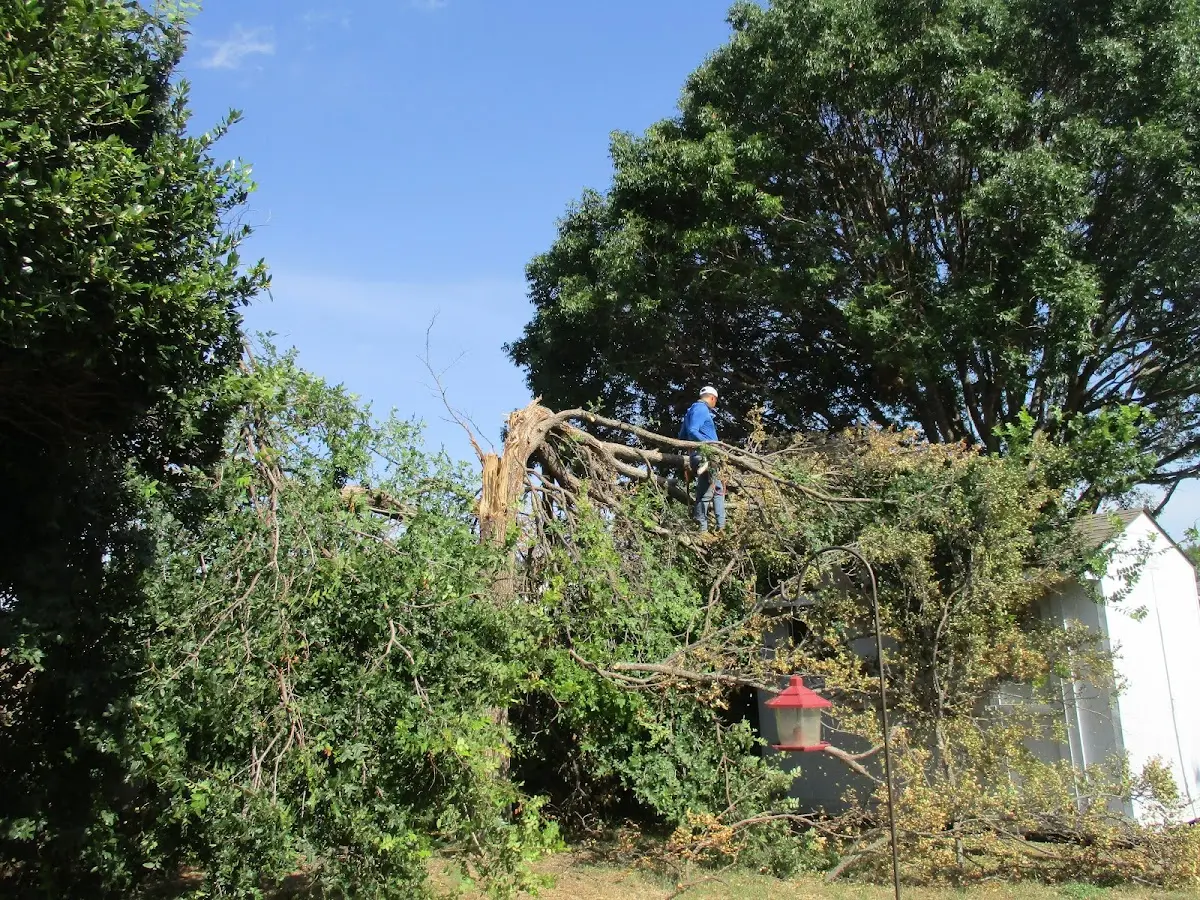
"Called for emergency tree service after a big limb came down on our shed. Crew was here within three hours, removed the limb, cleaned up all the debris, and did not even charge us extra for the after-hours call. That is integrity right there."
"Haney and Sons saved a 100-year-old elm on our property. Other companies told us to take it down. Their arborist did a careful evaluation, recommended cabling and a treatment plan, and the tree is thriving three years later. This is what 85 years of tree care knowledge looks like."